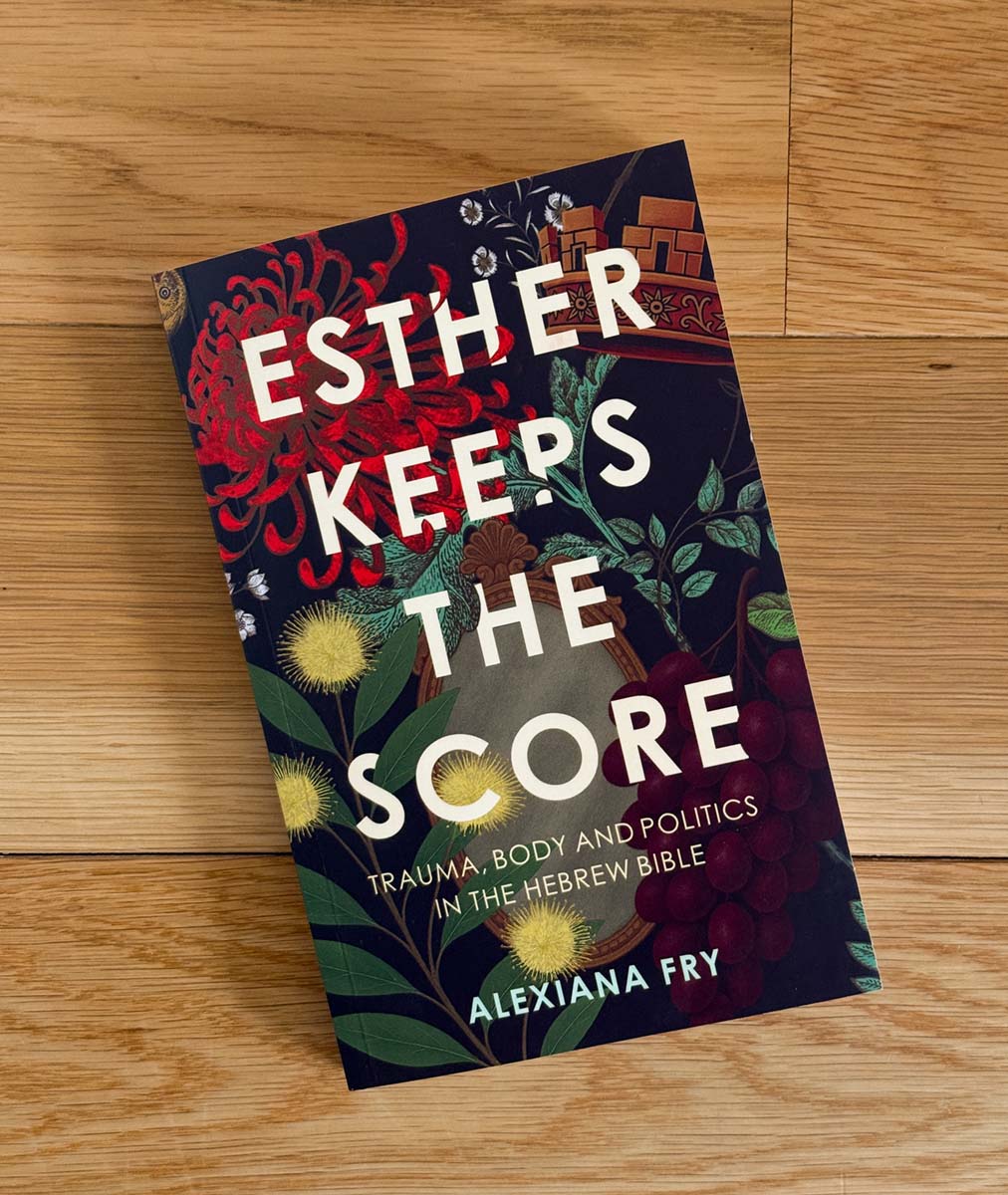
We can no longer read biblical texts that include explicit and implicit depictions of violence without awareness of trauma. In Esther Keeps the Score, Alexiana Fry challenges conventional interpretations of the Hebrew Bible/Old Testament book of Esther. It offers a full treatment of the violence found within, seen through a trauma-informed lens, acknowledging the many shifting contexts and power structures that create significant effect on the characters in the story. Through an analysis of gender and ethnic minoritization in diaspora settings, as well as how this shows itself in emotional and somatic compulsive responses, the book of Esther can be read afresh with empathic eyes.
Understanding Esther with a holistic view on how trauma is created, sustained, and perpetuated in both individuals and collectives due to oppression causes readers to necessarily consider stopping the cycle, both in the book and in their own worlds and lives. A must-read for Old Testament and trauma scholars, preachers, as well as anyone seeking to better understand how trauma operates in biblical narratives, this book reshapes our understanding of Esther's story and its implications for survival in a hostile world of patriarchy, sexism, misogyny and racism.

help your favorite authors, request a copy of this book at your local library
Fry’s work reminds us that trauma reveals itself in category-defying ways throughout all parts of the Hebrew Bible. With Fry’s transdisciplinary blend of literary criticism, trauma study, speech act theory, and modern novels and films, troubling texts such as the Levite’s concubine, Gomer’s violent marriage, and King Saul’s fate show the ethical complexity of traumatic texts and the ways that these biblical texts affect their readers and call them to act in response to traumas both past and present.
Brad E. Kelle, Point Loma Nazarene University;
author of The Bible and Moral Injury: Reading Scripture Alongside War’s Unseen Wounds
Fry makes sophisticated use of speech act theory and trauma theory, arguing that trauma resists the kind of closure and determinacy that speech acts attempt to create. Instead, she advocates reading “in the middle of the thick,” sitting with the text’s failure to arrive at closure. Fry does more than provide trauma-informed interpretations of biblical texts, or even a methodology for arriving at them. She shows readers how to avoid the safety valves of resolution and academic distance and how to cultivate the persistent willingness to dwell in the fog of trauma’s many ambiguities. Her work is generous and brave, and it belongs in any conversation about the Bible and trauma.
Chris Jones, Washburn University
I loved this book! One of the best experiences of being a teacher is seeing a student going off in interesting new directions, returning to teach you. From the opening chapter with its fascinating engagement with GennaRose Nethercott’s novel, Thistlefoot with its poignant metaphor of the house on chicken legs to deal with the trauma inflicted by Longshadow Man, to conversations between Shrek and Donkey to illuminate speech act theory, Fry’s monograph Trauma Talks offers fresh perspectives on the field of trauma Hermeneutics as it intersects with speech act theory to bring to life old texts in powerful new ways. Essential reading!
Juliana Claassens, Stellenbosch University
As much as trauma and speech act evade monosignification and stable categorization, Fry’s Trauma Talks in the Hebrew Bible presents a clear, accessible, and compassionate exposition of the two interconnected subjects, all without losing sight of their compound movements. Exchanging academic sterility for human complexity, Fry moves us through the thick traumatic contexts of the Hebrew Bible and the equally thick speech acts its traumas conjure. I echo her own invitation within the monograph: stay awhile.
Sarah Emanuel, Loyola Marymount University